Bridging
Languages Cultures Communities

We advance understanding of language use and learning through interdisciplinary research, innovative teaching, and service to multilingual communities worldwide.

Student/Alumni Spotlight

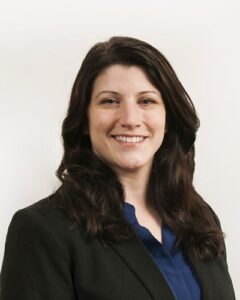
Ying Xiong

Ying has been recognized for her exceptional dedication to fostering inclusive, intellectually rigorous learning environments by the University.

Her thoughtfully designed courses blend rigorous academic writing, linguistic theory and critical reflection on lived experience. Students consistently laud her clarity, warmth and organization, describing her classroom as welcoming and intellectually engaging.

Ying Xiong, doctoral candidate in applied linguistics
Student/Alumni Spotlight

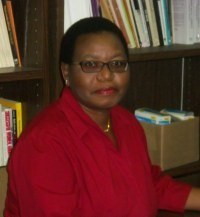
Mfundo Msimango

Applied Linguistics and African Studies doctoral student

Mfundo received funding from the McCourtney Institute for Democracy’s Research in Democracy Support Grant program to advance their project, "A Decolonial Case Study of How Teachers’ Educational Histories, Identities and Language Ideologies Shape the Enactment of Language Policy in Post-Colonial and PostApartheid South Africa."

News

Celeste Kinginger

Kirby Professor in Language Learning and professor of applied linguistics receives Modern Language Association’s Kenneth W. Mildenberger Prize

Celeste Kinginger, Kirby Professor in Language Learning and professor of applied linguistics at Penn State, recently received the Modern Language Association’s (MLA) Kenneth W. Mildenberger Prize for her book, “The Professional Lives of Language Study Abroad Alumni: A Mixed Methods Investigation” (Multilingual Matters).

Faculty Spotlight

Dr. Ariana Steele

Awarded the Gil Watz Early Career Professorship in Language and Linguistics.

The Politics of Being Seen and Heard: A Conversation with Professor Ariana Steele

We all exercise some control over how others perceive us—through the way we dress, talk, and act. But what happens when others don't see us how we want to be seen? This question is at the heart of Dr. Ariana Steele’s research. Drawing on their expertise in sociophonetics, Dr. Steele investigates what’s known as the production-perception interface: the relationship between how we talk and how we are perceived. For speakers who are multiply marginalized, such as trans and queer people of color, speech perception can be high stakes. The degree to which a trans woman is perceived as feminine based on the way she talks and dresses can affect whether she is exposed to violence. Likewise, the perception of a Black speaker as aggressive can impact their interactions with police. Informed by Black feminist abolitionist perspectives, Dr. Steele goes beyond exploring linguistic responses to transphobia and anti-Blackness; they ask how and why people are categorized in the first place, and how we might abolish these oppressive systems.

Dr. Steele joined the faculty at Penn State as Assistant Professor in Fall 2024, and they were awarded the Gil Watz Early Career Professorship in Language and Linguistics in Fall 2025. They hope this endowed professorship will enable them to dig deeper into this research agenda and expand their work with their interdisciplinary research group, the Trans and Queer Terrains Lab (TQT). Hannah Lukow, Ph.D. candidate in Applied Linguistics and member of the TQT Lab, sat down with Dr. Steele to discuss their trajectory into sociolinguistics, how their work in community organizing and nonprofits informs their scholarship, the challenges of mixing quantitative and qualitative methods, and what upcoming projects they are excited about.

HANNAH: How did you become interested in sociolinguistics?

STEELE: It was a few different ways. My grandpa is Norwegian, and when I was a kid, I asked my him: “What language do you think in? Do you think in English? Or do you think in Norwegian?” He couldn't really answer me, and I was puzzled by that. In high school, I took a class called Theory of Mind. We learned about the Sapir-Whorf hypothesis, the idea that the language you speak influences how you think. I was like, this is so cool. I just became obsessed with it. 

When I went to college, I took an introductory phonetics course, and it blew my mind. I was like wow, sounds can be so systematic and broken down in different ways! I loved learning about the vocal tract and seeing how the mouth looks from the side when people are talking, what the tongue does. I just found it so cool. I dove into linguistics and stayed with phonetics.  

I started getting involved in research during my first year in undergrad. And you know, I was really into it, but I always thought there was something missing in the psycholinguistics and phonetic psycholinguistic second language acquisition stuff I was helping folks with. When I went to my very first conference, I was talking to a grad student, and I was like, “This is so cool. I love phonetics. But don't you feel like there's something missing? Like, what about, like, culture? What about how power works, you know?” And she was like, “Oh, I think you might be into sociophonetics!” The next semester, I went to study abroad at the University of Edinburgh with Lauren Hall-Lew, Joe Fruehwald, and Joseph Gafaranga. I took a grad-level sociophonetics course, a sociolinguistics course, and a course on variationist sociolinguistics. That's when I started reading all the seminal papers and developing my first sociophonetic research ideas. 

HANNAH: So is that when you decided to apply to Ph.D. programs in linguistics?

STEELE: Yeah. I knew I was going to apply to a Ph.D. program the whole time because I received a Melon Mays Undergraduate Fellowship, which is about getting people of color to become professors. I was always planning to go to grad school, and I had this idea of being a professor for a long time. Lauren Hall-Lew helped me develop my original my ideas for my senior thesis, which was about the reverse linguistic stereotyping of Black people. I wanted to find out if, just by seeing a black face, it changes how you perceive a voice compared to a white face. From there, I went to Ohio State to work with Kathryn Campbell-Kibler, and that's where I got to dive into sociophonetics and sociolinguistics. 

HANNAH: Your work now uses a lot of mixed methods and qualitative methods. Did you also explore qualitative methods during your Ph.D.?

STEELE: Well, I often felt pressure to be super tied to my data, very empirical. Any claim I made had to be cited and significant in my quantitative statistical results, and I started to feel confined by that. I still really enjoy quantitative research, but it's something that I'm moving away from. If everything has to be tied to a significant result, or if every significant result has to only mean one thing without considering the social context or the role of power, then I just start to find it limiting. 

HANNAH: How have you navigated those limitations in your work?

STEELE: All my studies have been mixed methods for the most part. I've always incorporated interviews and description of the social context into my research. But I'm still trying to find my niche and figure out how to communicate this research in a way that people understand. I want people who are interested in variationist sociolinguistics to engage with my work, but I also hope they see that it's not all about the data. As I move further away from quantitative variationist sociolinguistics and more towards fields like linguistic anthropology and applied linguistics, it really excites me. I find it really fun, but I'm still trying to figure out how to do it in a way that feels right. 

HANNAH: I know you’ve also worked in nonprofit and organizing spaces. Can you tell me more about that?

STEELE: Within a few months of starting my Ph.D., I became deeply involved in community organizing—so involved that I fell behind in the program. I was really burnt out. In my second year of grad school, I was working from 9 am to 9 pm, I was teaching, applying to fellowships, and organizing. After a couple years of intense organizing, I needed a break. I needed a fresh start. I moved to Chicago and put my doctoral studies on hold. In that time, I worked at a couple of nonprofits in Chicago. The first organization I worked with was about workers' rights and preventing gender-based violence. The other nonprofit focused on young people of color and liberation through storytelling. I worked on writing grants and fundraising for those organizations. 

Most exciting for me, I also got to continue my police abolitionist work. I ended up being on the board for a nonprofit called Chicago Community Bond Fund. Around the time that I joined the board, they had just won their mission—they had successfully abolished cash bail in Illinois. So I was joining at this really important moment. We were starting to figure out, “well now what? We met the mission. Does that mean we change the mission? Does that mean we cease to exist? Do we shift to being a different type of organization?” And so I was board president of the Bond Fund for two years, and in that time, we decided to sunset the organization and close it. Basically, we asked ourselves: “why continue to exist and use all this money up on staff salaries when people can continue to do police abolitionist work in new ways?” 

During those two years that I took away from my Ph.D. program, I learned a lot. I learned that sometimes you just have to get things done. I learned how to work with a deadline. And then I also learned that my work doesn't have to be perfect. I'm still learning that part. Especially being on the board of the Bond Fund, I learned how to work in a committee-based environment in a way that feels aligned with my values. It surprised me that for the most part, we were able to uphold the Black feminist abolitionist commitments and values of the organization, even in a very institutionalized context. A lot of the stuff I learned there continues to inform how I work with people today. 

HANNAH: Totally. With all the service work expected in academia, that seems like a really important perspective. So how did you decide to study the speech production and perception of Black nonbinary speakers?

STEELE: Well, there was a glaring omission in who was studied in the field of “queer linguistics.” As a Black nonbinary person, I thought, we’ve got to change this. There was a lot of research on the so-called gay lisp, which argued that speakers who use fronted /s/ are perceived as more feminine and more gay, but those studies were limited to cisgender white men. How does that work when you’re neither white nor cis?  I was interested in that. Clearly the picture is not that simple. Speaking with a fronted /s/ doesn't necessarily mean that a speaker will be perceived as more feminine. And in fact, my research showed that Black nonbinary people using fronted /s/ may rate themselves as more masculine. What does it mean?  

As I started getting more into this research, I began to feel that studying my own community simply because we are underrepresented is not good enough. Does representation actually give people more support or more power? I started asking different questions. After taking a couple years off and doing nonprofit work, I got a fellowship with the Society of Fellows. The fellowship brought together an interdisciplinary group of grad students, and in that group, I finally started to feel okay combining my political community-based work on police and prison abolition into my research. I started reading Marquis Bey and more work from gender studies, more trans studies, more Black trans scholarship and abolitionist work. That made me realize that I can put a little bit of myself back into my research. It can't just be for the institution. 

HANNAH: Aha. Once you realized you could integrate your political work with your work in sociophonetics, where did you go next? 

ARIANA: Well, I think that's when I started to think about the role of perception and the listening subject. I did multiple perception studies to see, “okay, well, if Black nonbinary people are using /s/ differently, are they perceived differently? Can we mitigate anti-Blackness through speech?” Time and again, my research showed that the answer is no. People perceive things in this normative way where fronted /s/ is feminine. But if you sound Black, you are perceived as unfeminine or angry. That was depressing to hear. It got me wondering if we can we escape the paradigms that are placed on us—if we can escape how other people perceive us and interpellate us as particular kinds of subjects. If language and speech can only do so much, we have to shift the social power dynamics which enable stereotyping. This got me more into thinking that we need to abolish the systems that categorize us. 

Sometimes being sad about your research—or being disappointed in what you find—can actually be a fruitful place to dig more. Since my first study, I've just been asking: 
“But why? But why? But why? And what can be done?” Nowadays that means that I'm digging less into what can be done in experimental contexts, or what can be done through language. How did we get to a point where the way that I profess myself to be is not necessarily taken up by the people around me? How did we get to a point where identities are stated with power, but not necessarily understood or accepted? That's why the book I'm working on is looking at the role of self-identification in trans identity, especially online. Self-identification feels powerful and radical. On the other hand, self-identification can create boundaries between individuals or divisions between self and others that are not always useful. Part of the book will be a genealogy of how we got to this type of queer trans identity politics, and how those politics work through the internet. 

HANNAH: How do you understand the impact of your research?

STEELE: I'm thinking a lot about the relationship between activist and academic work. It’s easy to feel attached to the intellectual work I'm doing as being activist work. I don't know if it is, but I do think that there are very clear and obvious, real-world implications for the work that I do, especially when we're thinking about perception. My research questions don’t just come out of the blue or from a purely academic context. My friends and I are always thinking about how we're perceived. We're always thinking about, like, “will I be safe here dressed this way? How can I present myself and be taken seriously, or at least not be bothered?” So in a way, I feel like by bringing up these questions of perception in trans linguistics and queer linguistics, I'm bringing that lived reality of trans people and trans people of color to bear in a real way that academics need to take into account.  

I'm still trying to figure out how this research can give back to my communities. To some extent, my academic findings would be obvious to people who have lived through anti-Blackness and transphobia. So, the other thing that I want to bring into my research is an understanding of resilience. If the hegemonic outside world is telling us that this is how we're going to be perceived no matter what, what do we do? How do we create a world where we're not under these constraints? That's still in the back of my mind, and so in the next few years, I’m interested in exploring participatory research. This could potentially mean bringing back some of my original participants from the production study and asking them to look at the data with me to figure out, well, what is it saying to them? Because I can't be the only voice for what they're saying. I’m just one voice in one position and perspective that cannot represent all nonbinary people or Black nonbinary people. So yeah, with this institutional backing, I really want to find a way to give back. 

HANNAH: That makes sense. How do you think the Gil Watz Professorship might afford opportunities to engage in that work?

STEELE: Currently, I'm focusing the Gil Watz funds on my interdisciplinary research lab, Trans and Queer Terrains (TQT). Our group is exploring how to integrate perspectives from trans studies with questions about the role of normativities and hegemony in language and other semiotic representational systems. The Gil Watz funding will enable us to continue these really intellectually stimulating, interdisciplinary discussions, and do it in a way that is values-based, non-hierarchical, and collaborative. This year, we are organizing a colloquium at the American Association for Applied Linguistics (AAAL) conference about the connection between translanguaging and trans studies. The panel will bring together translanguaging experts from our own department, including Dr. Suresh Canagarajah and Merve Özçelik, with folks working on trans linguistics, including Nicky Macias and Montreal Benesch from the University of California at Santa Barabara. In addition, we are hosting an interdisciplinary retreat for graduate students across different departments who are interested in normativities, boundaries, and power. We are really excited about both of those projects. I am happy that the support from Gil Watz will enable me to be more creative—and a little less beholden to boundaries—with my research and collaborations going forward. 

Faculty Spotlight

Dr. Jacob Rieker

Awarded University of Jyväskylä (JYU) 2026 Visiting Fellow Programme Grant

Dr. Jacob Rieker was awarded a University of Jyväskylä (JYU) 2026 Visiting Fellow Programme Grant. Hosted by Dr. Dmitri Leontjev (JYU, Centre for Applied Language Studies), Dr. Rieker will engage in research collaborations on the DD-LANG (Dynamic Diagnostic Language Assessment) project, which is funded by the Finnish government. As part of the one-month visiting fellowship, he will offer professional development workshops to Finnish in-service teachers as well as seminars on Vygotskian approaches to qualitative research methodology and EPPIC’s EMI initiatives to researchers and graduate students in the Centre for Applied Language Studies. This fellowship represents a valuable opportunity to further strengthen the international collaborative ties between JYU and PSU Applied Linguistics, EPPIC, and the CLA.

Faculty Spotlight

Dr. David Hanks

Following Curiosity and Embracing Possibility

In a field often defined by carefully planned academic pathways, Dr. David Hanks, visiting Assistant Professor in the department of Applied Linguistics, embodies a very different story - one shaped by curiosity, openness and willingness to follow the unexpected. His path into linguistics was anything but conventional, yet it is precisely this unpredictability that has shaped him into the thoughtful scholar and teacher he is today. 

This spotlight traces his journey from a circuitous educational beginning to his work in linguistic anthropology, language policy and education. This reveals a scholar grounded in humility, attentiveness and deep care for the human connections that make learning possible. 

A Path Redirected by Curiosity 

Doctor Hanks’s academic journey began far from linguistics. “I dropped out of high school”, he recalls, describing his early years with refreshing honesty but his interest in astronomy drew him back to Community College where he began taking general education courses. That's when a required language class (Russian), unexpectedly changed everything. 

He found himself not only intrigued by the language but fascinated by the patterns, structures and reasoning behind it. “I realized I liked Russian, and I started taking almost a language semester, including Arabic, German, Mandarin, you name it”. But an even deeper shift was emerging: “I began to see that what I really liked wasn't just the languages themselves but the underlying mechanics of how language works”. That realization led him to linguistics. He eventually transferred to UCLA completed his bachelor's degree and began searching for ways to combine his interest in language with broader social questions. The search led him to Educational Linguistics at the University of Pennsylvania’s Graduate School of Education. 

Finding Direction Through Theory and People 

Graduate School became a turning point in his very first semester, he took an Indigenous education and language revitalization course that opened up a new intellectual horizon. He recalls sitting in a room surrounded by PhD students and thinking, “those were the conversations I wanted to be part of”. He was drawn to questions about how language interacts with identity, the political stakes of educational systems, how policy shapes linguistic opportunities and how communities negotiate language power and belonging. Scholars like Nancy Hornberger and Nelson Flores were formative influences, not because he had sought them out intentionally but because he remained opened to what he calls “serendipitous opportunities” 

Research Rooted in Relationship 

Perhaps the most compelling chapter of Dr. Hanks’s academic story begins with a plane ticket to Indonesia. This planned short exploratory trip, unexpectedly transformed into a major ethnographic project. “I was supposed to go to Bali for a couple of weeks just to see what was happening”, he explains, “but once there something shifted, I became deeply absorbed in the community, the language practices and the complexities of English medium instruction.” Suddenly the field site he hadn't planned on became the foundation of his dissertation. What made it meaningful wasn't just the research possibilities but the human relationships that grew around it. “I ended up forming close connections with local teachers and before I knew it, I had built an entire project out of the relationships that developed organically”. This experience reflects the core principle he now carries into all his work: scholarship is not simply about data, it's about the people who open their lives, classrooms and stories to the researcher. And for Dr. Hanks it is that dimension that makes scholarly work matter. 

A Warm Welcome into The Penn State Classroom 

Transitioning into Penn State as a Visiting Assistant Professor has been in his words an “unexpectedly smooth and energizing experience”. He speaks with enthusiasm about the students he has met, students who are in his view engaged thoughtfully and eager to interrogate the complexities of language. “It's encouraging to walk into a classroom and see how willing students are to engage with each other”, he says. “Their enthusiasm mirrors my own excitement. It's a kind of feedback loop." He emphasizes the importance of building a classroom community where students learn not just from the instructor but from each other. It is this collaborative energy, mirroring his own research ethos, that makes teaching for him a source of genuine joy. Being part of the Penn State Applied Linguistics community has also been affirming. He describes the department as supportive, welcoming and intellectually invigorating - a place where his interests can grow and branch in new directions. 

Advice To Students and Early Career Scholars 

When asked what advice he would offer to students entering applied linguistics, Dr. Hanks leans into the wisdom shaped by his own journey. “Cast a wide net”, he says. “The field is vast and deeply interdisciplinary: linguistic anthropology, sociolinguistics, language policy educational linguistics, critical applied linguistics. Anyone of them can become a home.” He encourages students to allow their interests to evolve rather than force themselves into a narrow lane too early. He also emphasizes the importance of relationships: “talk to people! Build networks! Ask questions! Most of the opportunities I've had, came from conversations I didn't expect to be important”. In other words, stay open both intellectually and interpersonally. That openness he suggests “is what allows scholars to notice the opportunities that crossed their path and to follow them in meaningful ways”. 

 A Scholar Grounded in Openness and Care 

Looking across Dr. David Hanks’s journey - from dropping out of high school to a multilingual explorer, from language enthusiast to ethnographer working in Bali and now to Visiting Assistant Professor at Penn State, one theme stands out: his commitment to staying open to possibilities. His path has never been linear, but it has been deeply intentional in its own way: guided by curiosity, achieved by human connection and strengthened by willingness to follow ideas wherever they lead. And it is precisely this spirit that enriches the teaching, research and community he brings to Applied Linguistics at Penn State.

      By Rose Asantewaa Ansah 

(RA, Head of Department) 

Upcoming Events
Dec
4
360 Willard Building
2:30 p.m.–4:00 p.m.
Jan
22
Foster Auditorium, 102 Paterno Library
2:30 p.m.–4:00 p.m.
Apr
2
Foster Auditorium, 102 Paterno Library
2:30 p.m.–4:00 p.m.
Languages Represented
0 +
Graduate Placement
0 %
World’s Top 2% Scientists
in Languages and Linguistics
0
Graduate Student to
Graduate Faculty Ratio
0 :1

Course Spotlight

If you want to teach English abroad! Teaching English is about more than teaching grammar. Discover how language teachers navigate culture, identity, learning, and social context in the classroom. This course helps future educators develop practical teaching strategies while critically examining the complex realities of language learning and education.
Course Instructor
Language does more than convey ideas. It creates communities, shapes identities, and connects cultures. This course examines the complex relationship between language, society, and communication, helping students understand how people build meaning, navigate cultural differences, and make sense of an increasingly diverse and interconnected world.
Course Instructor
APLNG 210
Why does English sound different in London, Lagos, Mumbai, and TikTok? Discover how English became a global language and how it continues to evolve through contact with new cultures, communities, and technologies. From colonial histories to digital futures, this course explores the ever-changing ecology of English in a connected world.
Course Instructor
Can language create inequality? Can it also challenge it? This course explores how language shapes power, identity, and social justice in everyday life. From schools and courts to workplaces and public debate, students will examine how beliefs about language influence opportunities, privileges, and social outcomes, while developing tools to critically analyze language and inequality in the world around them.
Course Instructor
Explore how gamers communicate, how gaming culture shapes the way we talk, and how language circulates across streaming platforms and everyday life. No experience in linguistics or gaming required, just curiosity about one of the most influential forms of digital culture today.
Course Instructor